
When Your Heart Horse Gets Older: Living With Cushing’s and Insulin Resistance
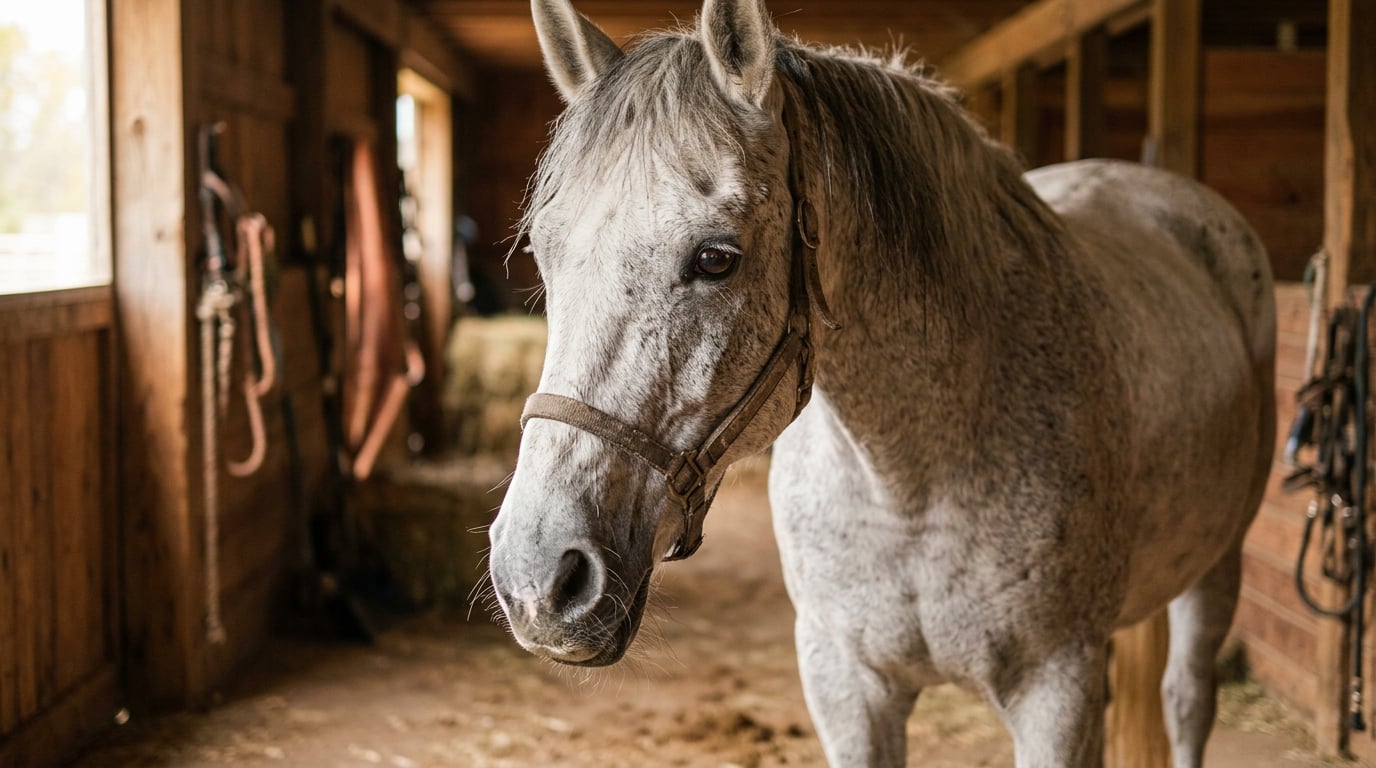
There’s a particular kind of quiet worry that creeps in when your horse starts getting older. Maybe it’s the winter coat that clings on well into June. Maybe it’s the cresty neck that wasn’t there last summer, or the fat pads above the eyes, or the way he seems just a half-step slower to come in from the field. You tell yourself he’s just getting older. And he is — but sometimes it’s more than that.
Two of the most common things we run into with aging horses are Cushing’s disease (PPID) and insulin resistance (part of Equine Metabolic Syndrome). They’re not the same thing, they can overlap, and neither one is a death sentence. But they do ask something of us: attention, consistency, and a willingness to change the routine we’ve had comfortable for years.
First, the thing nobody says out loud
It is genuinely hard to watch a horse you’ve loved for a decade or two start to change. The guilt sneaks in — did I miss something? should I have caught this sooner? Let me say this plainly: noticing now is enough. Horses are masters at hiding what’s going on. The fact that you’re reading this means you’re already doing the work of a good owner.
What Cushing’s (PPID) actually looks like day to day
PPID is a hormonal condition — a small benign change in the pituitary gland that throws off the signals controlling a lot of the body. The classic signs sneak up over seasons, not days:
- A long, curly coat that doesn’t shed out on time (the tell-tale sign)
- Loss of topline muscle even when weight looks fine
- Increased drinking and urination
- Recurring hoof abscesses or laminitis episodes
- A generally “off” immune system — slow-healing wounds, more skin issues
If any of this rings a bell, it’s a conversation with your vet and usually a simple blood test (ACTH). The good news: there’s a well-established daily medication (pergolide) that manages it well for a lot of horses. The catch — and this is the part that trips people up — is that it only works if it’s given consistently, every single day.
Insulin resistance and the laminitis fear
Insulin resistance is the one that keeps me up at night, because its scariest complication is laminitis. When a horse’s body stops responding to insulin properly, sugars and starches in the diet spike blood insulin, and for some horses that’s the trigger for a laminitic episode.
The management is mostly about the diet and the details:
- Low sugar and starch (low NSC) forage — testing your hay, or soaking it, can make a real difference
- No lush spring grass free-for-all — grazing muzzles and dry lots become your friends
- Careful body condition monitoring — those cresty necks and fat pads are data, not just cosmetics
- Movement, as much as soundness safely allows
The horses who do best aren’t the ones with the fanciest supplements. They’re the ones whose people are consistent — same routine, same watchful eye, week after week.
The real challenge isn’t knowing — it’s remembering
Here’s the honest truth after years of doing this: the hard part of senior horse care usually isn’t the veterinary science. Your vet gives you a solid plan. The hard part is the daily execution — the pergolide given at the same time every morning, the weight checked every couple of weeks so you catch a creeping change early, the ACTH retest scheduled for the right season, the farrier kept on a tight cycle because those feet can’t afford a long gap.
Miss a few doses here, forget a weigh-in there, lose track of when the last blood panel was — and a well-managed horse can quietly slide. Not because you don’t care. Because life is busy and it all lives in your head.
How I keep the older ones steady
For my seniors, I stopped trusting my memory and started writing everything down in one place — medication schedules, weight trends, vet dates, farrier cycles, the little notes like “coat looked slow to shed this year.” Being able to glance back over months and actually see the pattern is what lets me call the vet before something becomes an emergency, instead of after.
That’s honestly why I built EquiNexus the way I did — not as a fancy tech thing, but as the barn notebook I always wished I had: every horse’s meds, health notes, weight history, and appointments in one calm place, with reminders so the daily pergolide and the seasonal retest don’t slip. If that’s a struggle you recognize, it might help you too. And if you’ve got your own system that works — wonderful. The horse doesn’t care what tool you use, only that you’re consistent.
Our older horses gave us their best years. Managing Cushing’s or insulin resistance well is one of the quiet ways we give that back.
EquiNexus was built by a barn owner to take the mental load off days like these — keeping every horse’s meds, vet dates, and feeding notes in one calm place, so nothing important slips through.
Try it free for one horseNo credit card required.