
Feeding the Metabolic Horse Through the Seasons
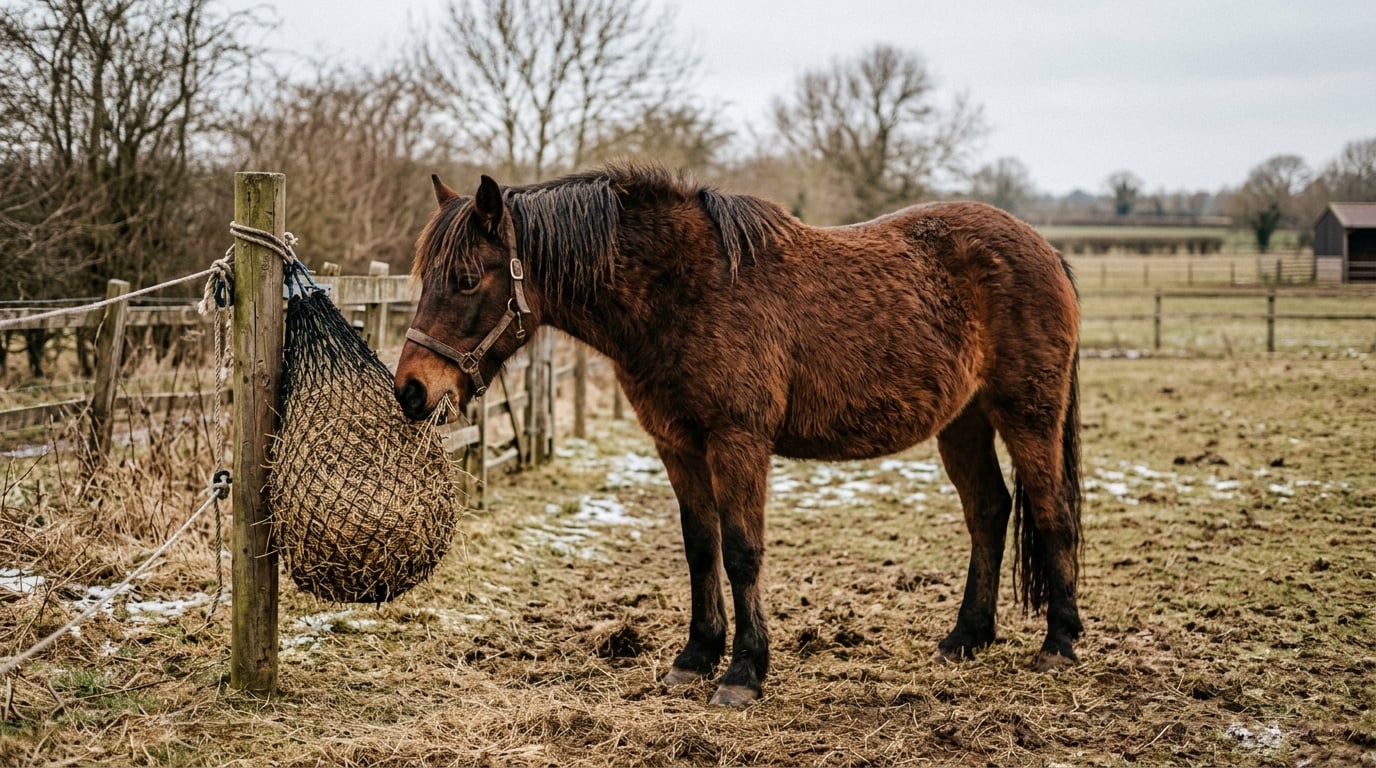
If you’ve got a horse with insulin resistance, Cushing’s, or a history of laminitis, you already know feeding them isn’t as simple as “throw hay, add a scoop.” The seasons throw curveballs, and what’s safe in December can be a real risk in April.
This isn’t veterinary advice — your vet and ideally an equine nutritionist should shape the actual plan for your horse. But here’s the seasonal thinking that’s helped me keep the metabolic horses in my care sound and steady.
Spring: the dangerous season
Everybody loves spring except the person managing a metabolic horse. That lush, green, fast-growing grass is loaded with the sugars (fructans and simple carbs) that spike insulin — and for a susceptible horse, that’s laminitis territory.
- Limit or eliminate grazing during the high-risk flush, especially on sunny days after cool nights (that’s when sugars peak)
- Grazing muzzles can cut intake dramatically while still letting them be a horse out with friends
- Dry lots are worth their weight in gold this time of year
- Watch the feet like a hawk — a slightly “pottery” walk or a bounding digital pulse is an early warning, not a wait-and-see
Summer: routine, with a watchful eye
Summer is often the steadiest stretch. The goal is consistency: the same low-sugar forage, the same turnout rules, regular movement to keep insulin sensitivity up. This is a great season to get honest about body condition — run your hands over ribs, crest, and those tell-tale fat pads and actually record what you find, so you’re comparing against something real later.
Fall: the second grass trap
People forget that a fall flush — when rain revives tired pastures — can be just as sugar-rich as spring. The same precautions apply. Fall is also when you want to be planning your winter hay supply, which brings us to the big one.
Winter: it’s all about the hay
When grass goes dormant, hay becomes the entire diet — so which hay matters enormously.
- Test your hay if you possibly can. “Low NSC” (ideally under ~10–12% for the sensitive ones) is the number to chase
- Soaking hay for 30–60 minutes can lower sugar content when you can’t source ideal hay
- Don’t over-restrict — metabolic horses still need adequate forage; the answer is lower-sugar, not less food to the point of stress
- Recheck body condition; some horses lose the “grass weight” and need adjusting
The metabolic horse rewards consistency and punishes surprises. Your job is mostly to remove the surprises.
The thread that ties it all together
Notice what every season has in common: it’s about tracking and timing. When did the grass come in? What did the last body condition check show? When is the hay analysis due, and what did last year’s say? What weight was he at this time last year versus now?
Those patterns only become useful if you write them down. A weight logged once is a number; a weight logged monthly is a trend that can warn you before trouble.
I keep all of it — weights, feeding notes, body condition, the “moved to the dry lot on this date” details — in EquiNexus, precisely because the seasonal picture only makes sense when you can see months side by side. Any system that lets you do that works. The horses just need us to be paying attention, season after season.
Managing a metabolic horse is a marathon, not a sprint. Be kind to yourself on the hard days — and celebrate the sound, comfortable seasons when they come.
EquiNexus was built by a barn owner to take the mental load off days like these — keeping every horse’s meds, vet dates, and feeding notes in one calm place, so nothing important slips through.
Try it free for one horseNo credit card required.