
Turnout Groups: The Herd Dynamics That Make or Break Your Day
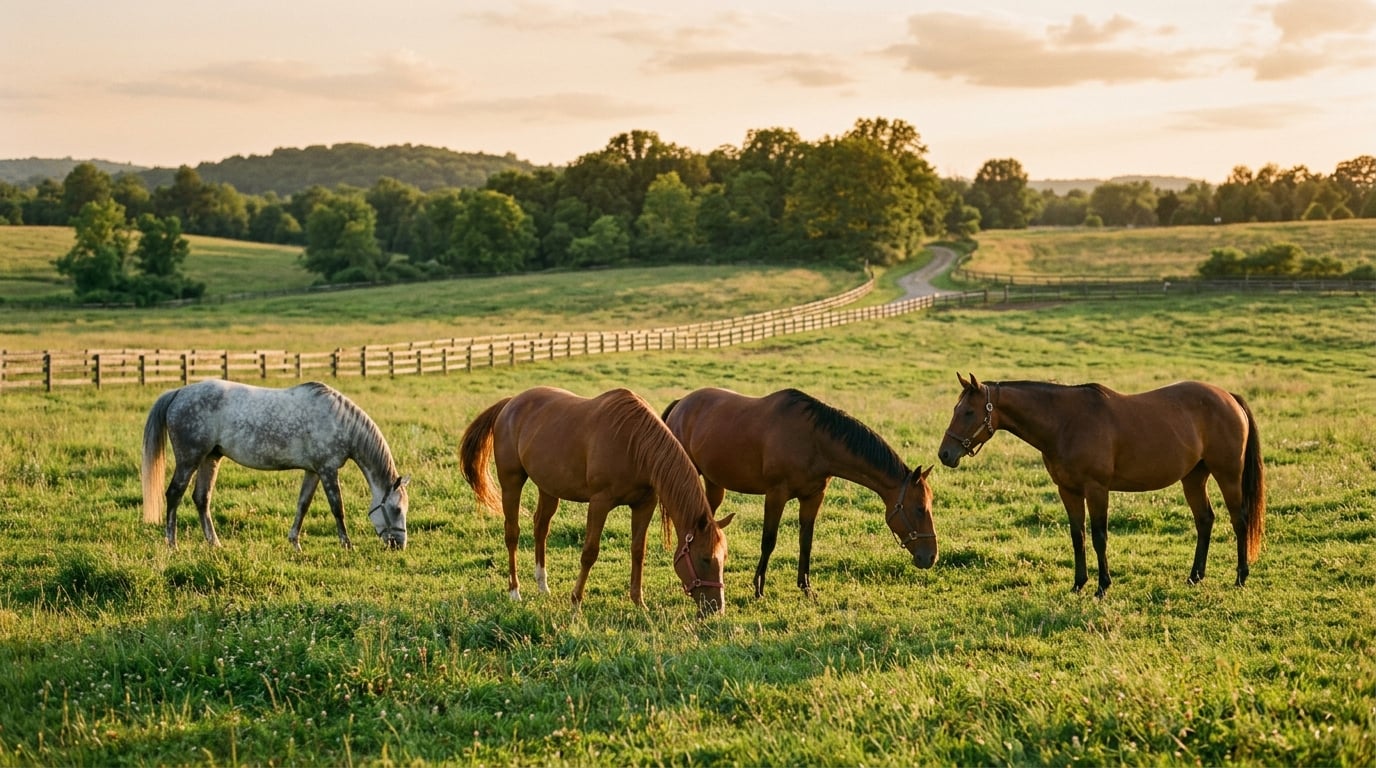
If you want to know whether a barn is run well, don't look at the tack room. Look at the turnout groups.
Because who goes out with whom is one of those decisions that seems small and turns out to be enormous. Horses spend most of their lives in the field, not under saddle. The company they keep out there shapes their stress, their body condition, their soundness, and — very directly — how much of your day gets eaten up by drama. A good group is a quiet field you barely think about. A bad group is a full-time job with a vet bill attached.
I've built a lot of turnout groups over the years, and gotten plenty of them wrong before I got them right. Here's how I think about it now.
The herd is a social structure, not a parking lot
The first mistake I ever made was treating turnout like parking — open field, put horses in it, done. But a herd is a social structure with a real hierarchy, and horses are constantly, quietly negotiating it. Most of that negotiation is invisible: an ear pin, a step away, a subtle "you eat over there." It only becomes your problem when the match-up is wrong and the negotiation turns physical.
So the goal isn't to eliminate hierarchy — you can't. The goal is to build groups where the hierarchy can settle peacefully, with enough room and resources that nobody has to fight to feel secure.
What I actually look at when building a group
A few things matter more than breed or color or any of the stuff people fixate on:
Temperament match. A pushy, high-energy horse can make a timid one's life miserable, even without any real aggression — the quiet one just never relaxes. I try to group horses whose energy and confidence levels are roughly compatible. Bold with bold, gentle with gentle, whenever I can.
Play style. Geldings especially can be wildly different: some want to wrestle and gallop and roughhouse all day, others find that exhausting and stressful. Two horses who love to play hard are a joy together. A hard player paired with a horse who hates it is a recipe for kick marks.
Metabolic and dietary needs. This one gets overlooked. An easy keeper who needs a grazing muzzle and restricted grass simply cannot live in the same lush field as a hard keeper who needs all the forage he can get. Grouping by dietary need is often as important as grouping by personality.
Age and soundness. My older, arthritic gentleman does not belong in the group that gallops the fence line at feeding time. He belongs with the calmer crowd where he can move at his own pace and not get run into a fence trying to keep up.
Introductions are where it's won or lost
How you introduce a new horse matters as much as the grouping itself. Throwing a newcomer straight into an established group is asking for trouble — they have a settled order and a stranger upends it.
What works for me: let them meet over a fence line first, for days if I can. Turn the new horse out alone in the adjacent paddock so everyone can sniff and squeal and get the big reactions out with a safe barrier between them. Then introduce them in pairs — pick the most easygoing member of the group to be the new horse's first friend — before adding them to the whole crowd. And pull hind shoes if you can during introductions; a kick from a bare hoof does far less damage.
And always, always do it earlier in the day when you're around to watch, not at dusk right before you leave. If it's going to go sideways, you want to be there.
Keep track of who's where
Here is the unglamorous part that actually prevents most of the chaos: know, at a glance, which horse is in which group and why. When you've got more than a handful of horses, the details start to blur — who's on the grazing muzzle, who can't be with the bay gelding, who's still in the "introduction" phase, who moved groups last week when the dynamics shifted.
When that lives only in your memory, it falls apart the moment someone else does turnout, or you're out sick, or you're just tired. I keep my pasture assignments written down — which is exactly what the pasture and turnout tracking in EquiNexus is for — so anyone helping can see who goes where, and so I can look back and remember why I moved a horse when a dynamic changed. It turns "I think he goes in the back field?" into a certainty.
When to break up a group
Finally: be willing to change your mind. A group that worked in spring might sour when the grass changes, or when one horse's role shifts, or when a new arrival tips the balance. Persistent kick marks, a horse losing condition, one who's always off by himself and tense, or real injuries — those are the field telling you the math has changed. Don't be stubborn about a grouping just because it used to work.
Get the groups right and turnout becomes the easiest, most restorative part of your horses' day — and the quietest part of yours. That quiet field is not luck. It's a decision you make, every day, about who belongs together.
EquiNexus was built by a barn owner to take the mental load off days like these — keeping every horse’s meds, vet dates, and feeding notes in one calm place, so nothing important slips through.
Try it free for one horseNo credit card required.