Barn Notes: First-Frost Edition
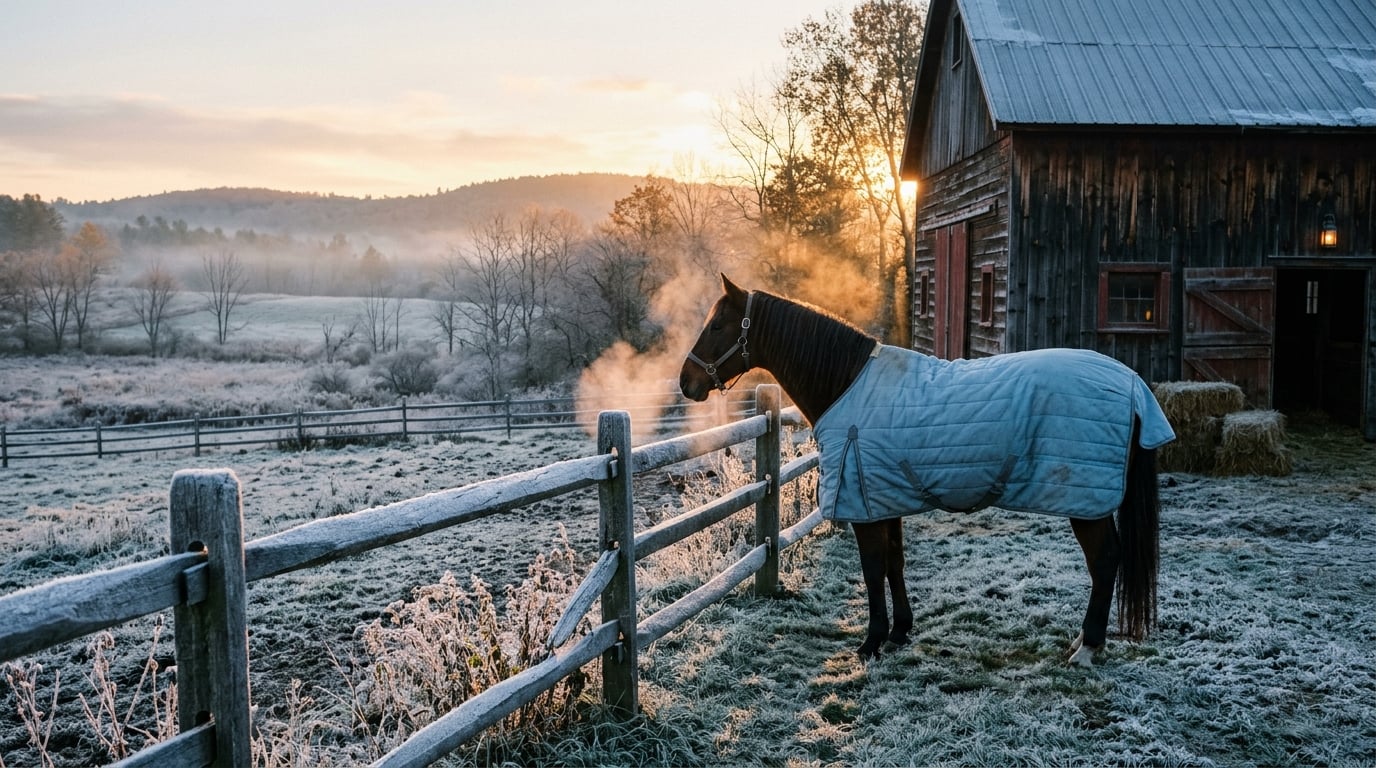
You always know the exact morning. You walk out for feed and your breath is hanging in the air, the grass crunches under your boots, and the water buckets have that first thin skin of ice on top. First frost. The barn's way of saying, gently but firmly, that winter is no longer a rumor.
Welcome back to Barn Notes — the seasonal check-in where, a few times a year, we pause and catch the small stuff while it's still small. Last time we walked the place in early-fall gold light. This time the light's gone crisp and the to-do list has shifted. Here's what's on mine.
Water is the whole ballgame now
If I could tattoo one sentence on every barn wall for winter, it's this: horses drink less in the cold, and that's how impaction colics happen. The single most important thing you can do all winter is keep water clean, ice-free, and — ideally — not freezing cold.
So first frost is my cue to test every water heater and heated bucket before I actually need them. Nothing worse than discovering a dead tank heater at 5am on the first truly frigid day. Check the cords for chew damage while you're at it. And if your horses are the type who drink more when the water's warmer (most are), getting those heaters running now, before the deep cold, genuinely reduces your colic risk. This is not the season to wing it on water.
The blanket question, one more time
Every barn has The Blanket Debate, and I'm not going to settle it here. But first frost is when I make my plan rather than react day to day. Which horses are clipped and therefore genuinely need help holding heat? Which ones are growing a coat like a woolly mammoth and will overheat under a blanket? Who's old or hard-keeping or otherwise needs the extra help this year that they didn't last year?
I pull all the blankets out now, check them for tears and busted straps, and do the repairs or replacements before the cold snap, not during it. A horse standing wet and shivering because his only turnout sheet has a broken surcingle is a very avoidable problem — in October.
Hay: do the winter math
By first frost the grass has basically quit for the year, which means your horses are shifting to hay as their main forage — and forage is also how they stay warm, since digesting it generates heat from the inside. This is the moment I do the honest winter math: how much hay will I actually go through, is it sourced and stored dry, and do I have a cushion for the stretch when everyone's prices spike and supply gets tight?
Buying your winter hay in a panic in January is how you end up overpaying for whatever's left. Lock it in now if you can.
The small stuff that bites you later
A few quick ones that are easy to forget until they're a problem:
- Frozen ground and hooves. Hard, frozen, rutted ground is tough on legs and can hide ice. Keep an eye on turnout footing, and talk to your farrier about traction if you ride through winter.
- Fewer daylight hours. Chores now happen in the dark on both ends. Check that your barn and paddock lighting actually works before the clocks change and you're feeding by phone flashlight.
- Fall vaccines and the dental. Many of us do a fall check-up — it's a good time to get the vet out for anything you've been putting off before holiday schedules get crazy.
The spirit of the thing
More than any single chore, first frost is a moment to walk your place and look ahead. Stand in the aisle with your coffee steaming in the cold air and ask: what will I wish I'd handled, come the first genuinely brutal week? Then write those things down while they're still small and calm, instead of scrambling when it's ten degrees and everything's an emergency.
That's the whole heart of Barn Notes — and honestly the whole heart of why I built the reminders and seasonal scheduling into EquiNexus. So the water-heater check and the blanket repairs and the hay order don't live rent-free in your head, they live somewhere with a due date, and winter arrives as a series of small handled tasks instead of one big cold scramble.
I'll see you at the next Barn Notes, when we're in the thick of it and talking real winter. Until then — test those heaters, patch those blankets, and enjoy the strange quiet beauty of that first frozen morning. Bundle up out there.
EquiNexus was built by a barn owner to take the mental load off days like these — keeping every horse’s meds, vet dates, and feeding notes in one calm place, so nothing important slips through.
Try it free for one horseNo credit card required.