
The Quiet Pain: Understanding Equine Ulcers Before They Become a Crisis
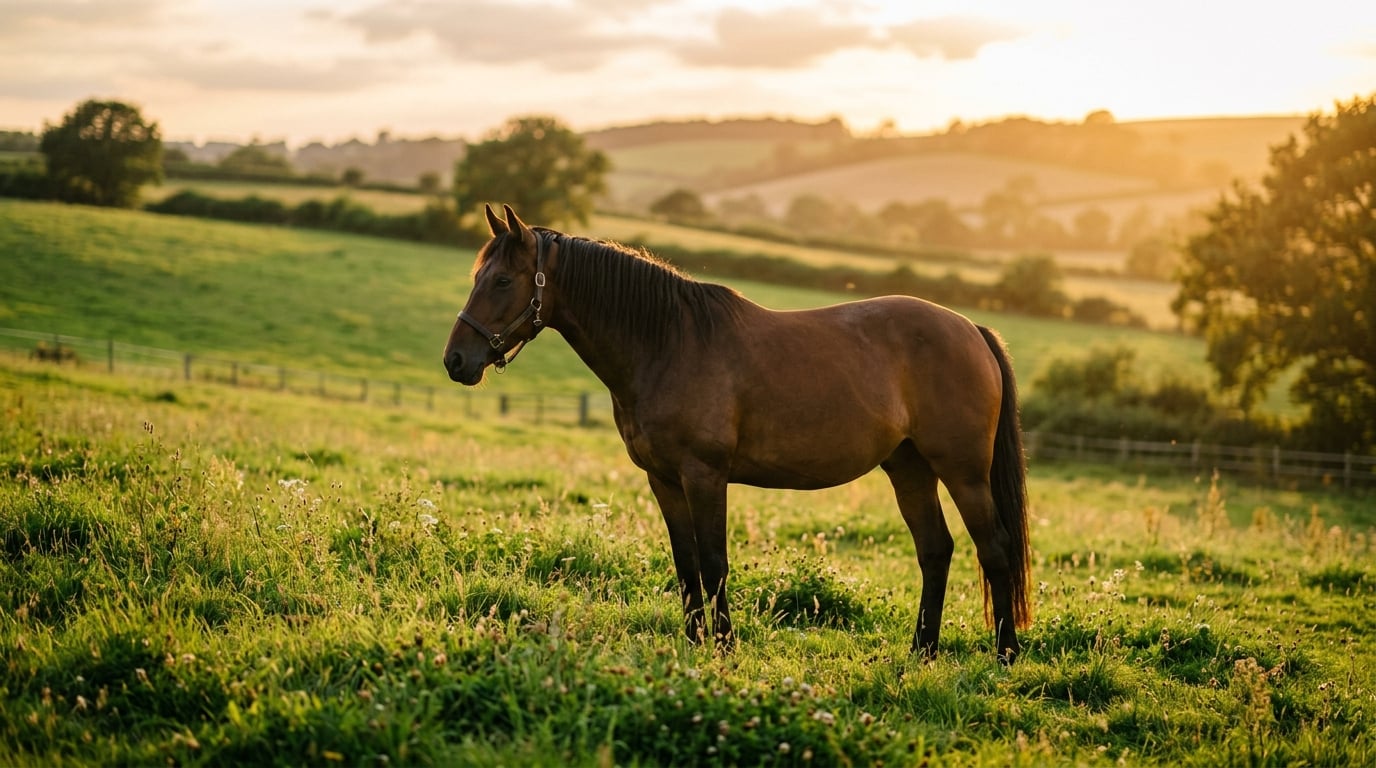
There is a moment every barn owner dreads — the one where you stand in the aisle looking at your horse and think, something is off, but I cannot name it. He is not lame. He is not colicking. He just… is not himself. A little girthy. A little dull in the eye. Leaving a few bites of grain in the bucket when he used to lick it clean.
For a long time, I chalked those moments up to weather changes, or a bad day, or just a mood. It was not until one of my own horses was scoped and we saw the angry red patches lining his stomach that I understood: he had been hurting for weeks, quietly, and I had been looking right past it.
That is the thing about equine gastric ulcers. They are heartbreakingly common, and heartbreakingly easy to miss.
How common are we really talking?
Studies vary, but the numbers are sobering. Research consistently shows that 60 to 90 percent of performance horses have some degree of gastric ulceration. And it is not just the show horses or the racehorses — pleasure horses, broodmares, even retired pasture puffs can develop them. The horse's stomach produces acid around the clock, whether there is food in it or not. That simple biological fact is the root of most of the trouble.
If your horse has ever gone more than a few hours without forage — during a trailer ride, an overnight stall stay with no hay, a busy show day — his stomach was bathing in acid with nothing to buffer it. That is not a management failure on your part. That is just how their digestive system works, and it catches a lot of good horsekeepers off guard.
The signs that hide in plain sight
Ulcers do not announce themselves the way a wound or a fever does. Instead, they whisper:
- Girthiness — flinching, pinning ears, or turning to bite when you cinch up
- Picky eating — leaving grain, eating slowly, or losing interest in feed
- Weight loss that does not match the calories going in
- Dull coat or a general lack of bloom, even on a good nutrition program
- Attitude changes — a normally easygoing horse getting cranky, anxious, or withdrawn
- Mild, recurring colic signs — especially after eating or during stress
- Reluctance under saddle — shortened stride, unwillingness to bend, resistance that feels behavioral but is not
- Grinding teeth or excessive yawning
Here is what makes it so tricky: every one of those signs has a dozen other possible explanations. Your farrier might say it is a hoof issue. Your trainer might say it is a training problem. Your vet might not think "ulcers" until you have ruled out everything else. And meanwhile, the horse just keeps quietly hurting.
The hardest part of ulcers is not the treatment. It is believing something is wrong when your horse cannot tell you in words.
What actually causes them
The equine stomach has two regions, and they handle acid very differently:
- The lower glandular region produces the acid and has a mucus lining designed to withstand it.
- The upper squamous region has no such protection — it was designed for a life of near-constant grazing, where a mat of forage and saliva would buffer the acid splash.
When we keep horses in ways that interrupt constant grazing — meals spaced hours apart, stall confinement, grain-heavy diets, travel, competition stress — the upper stomach gets exposed to acid it was never built to handle. That is the most common type of ulcer: Equine Gastric Ulcer Syndrome (EGUS), specifically squamous ulceration.
Glandular ulcers (in the lower, protected region) are a different beast — less understood, often linked to stress and NSAIDs, and sometimes harder to treat.
The common risk factors:
- Intermittent feeding — long gaps between meals
- High-grain, low-forage diets — grain increases acid production and decreases chewing and saliva
- Stall confinement — less movement, less grazing, more stress
- Transport and competition — physical and psychological stress
- NSAID use — bute, banamine, and similar drugs can damage the stomach lining
- Intense training — exercise increases abdominal pressure, splashing acid onto the unprotected upper stomach
Notice that none of these are things a bad horse owner does. They are things nearly every horse owner encounters at some point. That is why the prevalence numbers are so high.
What you can do — starting today
You do not need to wait for a scope or a diagnosis to start making changes that protect your horse's stomach. Most of these adjustments are just good husbandry:
Feed more forage, more often
This is the single most impactful change. A horse with constant access to hay or pasture produces more saliva (a natural buffer) and keeps a forage mat in the stomach that shields the squamous lining. If free-choice hay is not practical, slow feeders or more frequent, smaller hay meals help enormously.
Reduce grain where you can
Grain ferments in the stomach and produces volatile fatty acids that can damage the lining. If your horse needs the calories, consider switching some of the grain ration to fat sources (oil, rice bran) or beet pulp, which are gentler on the stomach.
Offer forage before exercise
A small amount of hay 30 minutes before riding gives the stomach something to hold the acid down during work. This is one of those changes that costs nothing and can make a real difference.
Manage stress thoughtfully
Easier said than done, I know. But turnout time, buddy systems, consistent routines, and minimizing unnecessary stall time all reduce the chronic low-grade stress that contributes to ulcers.
Be cautious with NSAIDs
Bute and banamine have their place, absolutely. But routine or prolonged use takes a toll on the stomach lining. Work with your vet on the lowest effective dose and shortest duration when these drugs are needed.
Keep a record of subtle changes
This is the one that I keep coming back to. The signs of ulcers are so subtle and so gradual that you might not notice them unless you have something to compare against. When you track daily health observations — appetite, attitude, energy, girthiness — over weeks and months, patterns emerge that you would never catch from memory alone.
That is honestly one of the reasons I built the health tracking into EquiNexus the way I did. Not because an app replaces your instincts — nothing does — but because having a written record of "he was a little off his feed Tuesday and Thursday, and girthy at the cinch on Wednesday" gives you and your vet something concrete to work with instead of a vague feeling that something might be wrong.
When to call the vet
If you are seeing several of the signs above — especially if they persist for more than a week or two — it is time to have the conversation with your veterinarian. The gold standard for diagnosis is gastroscopy (scoping the stomach), which lets the vet see exactly what is happening and grade the severity.
Treatment typically involves omeprazole (the active ingredient in GastroGard and UlcerGard), which suppresses acid production and gives the stomach lining time to heal. Treatment courses usually run 28 days or more. Your vet may also recommend sucralfate for glandular ulcers.
The important thing to know: ulcers are very treatable. Horses often show improvement within days of starting medication. The challenge is not the treatment — it is catching the problem in the first place and then making the management changes that prevent recurrence.
The guilt trap
I want to say this plainly, because I have felt it and I know you might too: discovering your horse has ulcers does not mean you failed him. The prevalence numbers alone tell you that this is a condition baked into the way we keep horses in the modern world. Even the most conscientious, forage-first, low-stress barns see ulcers.
What matters is what you do once you know. And the fact that you are reading this — that you are the kind of person who pays attention, who looks things up, who worries about the quiet signs — tells me your horse is in good hands.
They cannot tell us in words. But they tell us in a hundred small ways, if we learn where to look. Trust your gut when something feels off. Write it down. And do not wait until a crisis to ask the question.
Your horse will thank you for it — quietly, the way they always do.
EquiNexus was built by a barn owner to take the mental load off days like these — keeping every horse’s meds, vet dates, and feeding notes in one calm place, so nothing important slips through.
Try it free for one horseNo credit card required.