
The Boarding Contract Conversation No One Wants to Have
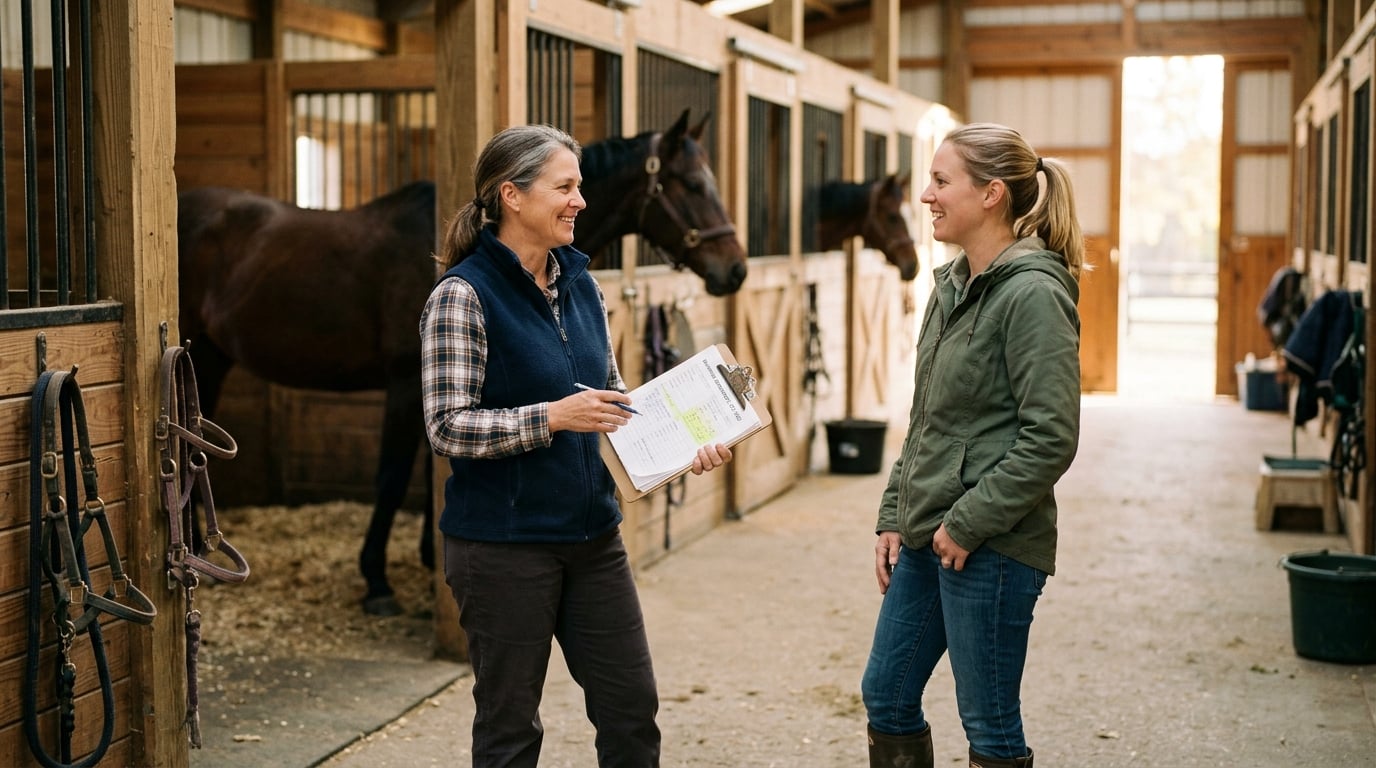
When I took in my first boarder, I did it on a handshake and a good feeling. She was lovely. Her horse was easy. And for about eight months, everything was wonderful — right up until the day our unspoken assumptions collided, and we realized we had each been picturing a completely different arrangement.
Nothing dramatic. Just the slow friction of two well-meaning people who never actually said out loud what they expected. And it taught me something I now believe deeply: a boarding contract is not a wall you put up against people. It is a bridge you build so the relationship can survive the hard days.
Why we avoid it
We avoid the contract conversation because it feels cold. You like this person. You are handing them a piece of your barn and taking a piece of their trust, and pulling out a document feels like saying "I don't believe you." So we wave it off. We keep it casual. We tell ourselves we will sort out the details if they ever come up.
The problem is that the details always come up. The only question is whether you sorted them out when everyone was calm and happy, or whether you are sorting them out at 9pm during an emergency, or during a billing dispute, or when someone is standing in your aisle upset.
A contract written when everyone is happy is a gift to the version of you that will one day be stressed.
What actually belongs in the conversation
You do not need a lawyer's tome. You need clarity on the handful of things that reliably cause friction. Here is what I make sure to cover, out loud and in writing:
The money, plainly.
- What board costs and exactly what it includes
- When it is due, and what happens when it is late
- What costs extra: blanketing, holding for the farrier, medication administration, supplement feeding, extra turnout
- How rate increases are handled and how much notice you give
The care, specifically.
- Turnout schedule and your right to adjust it for weather or footing
- Feed and hay — what you provide, and how owner-supplied feed or supplements are handled
- Who the barn's vet and farrier are, and whether boarders can use their own
- What routine care you handle versus what the owner arranges
The emergencies, before they happen.
- Your authority to call the vet if the owner cannot be reached, and up to what dollar amount
- Who the emergency contacts are
- What happens with the bill for emergency care
The exit, gracefully.
- How much notice either side gives to end the arrangement
- What condition things are left in
- How a final bill or refund is settled
The rules, honestly.
- Barn hours, guest and visitor policy, and helmet or safety rules
- Whether they can have their trainer or farrier come in, and any requirements for those professionals
How to bring it up without it feeling cold
The framing is everything. I do not present the contract as "here are my terms." I present it as "here is how I make sure nothing about your horse's care is left to guesswork." Because that is genuinely what it is.
I walk through it with them in person. I invite them to ask questions and to tell me what matters most to them about their horse's care, and I write those things in. When a boarder sees their own priorities reflected in the document — "soaks hay," "gets his fly mask on by 8am in summer," "call me first, always" — the contract stops feeling like a legal shield and starts feeling like a care plan. Which it is.
Keep the details where you can find them
One more thing I learned the hard way: a beautiful contract does you no good if the actual day-to-day details live only in your head. Which boarder pays on the 1st and which on the 15th. Whose horse gets the joint supplement. Who is three weeks behind. When you are managing more than a couple of horses, that information has to live somewhere you can actually see it — boarder records, billing, and who owns which horse, all in one place.
That is a big part of why the boarding and invoicing tools in EquiNexus exist the way they do. Not to replace the human relationship — the conversation still has to happen, face to face, like adults who respect each other. But once you have had it, the terms you agreed to should not be scattered across text messages and sticky notes. They should be somewhere calm and findable, so the next hard day is a little less hard.
The awkward conversation is the price of a relationship that lasts. Have it early, have it kindly, and write it down — for both of you.
EquiNexus was built by a barn owner to take the mental load off days like these — keeping every horse’s meds, vet dates, and feeding notes in one calm place, so nothing important slips through.
Try it free for one horseNo credit card required.