
"Is It Colic, or Am I Overreacting?" — Reading the Early Warning Signs
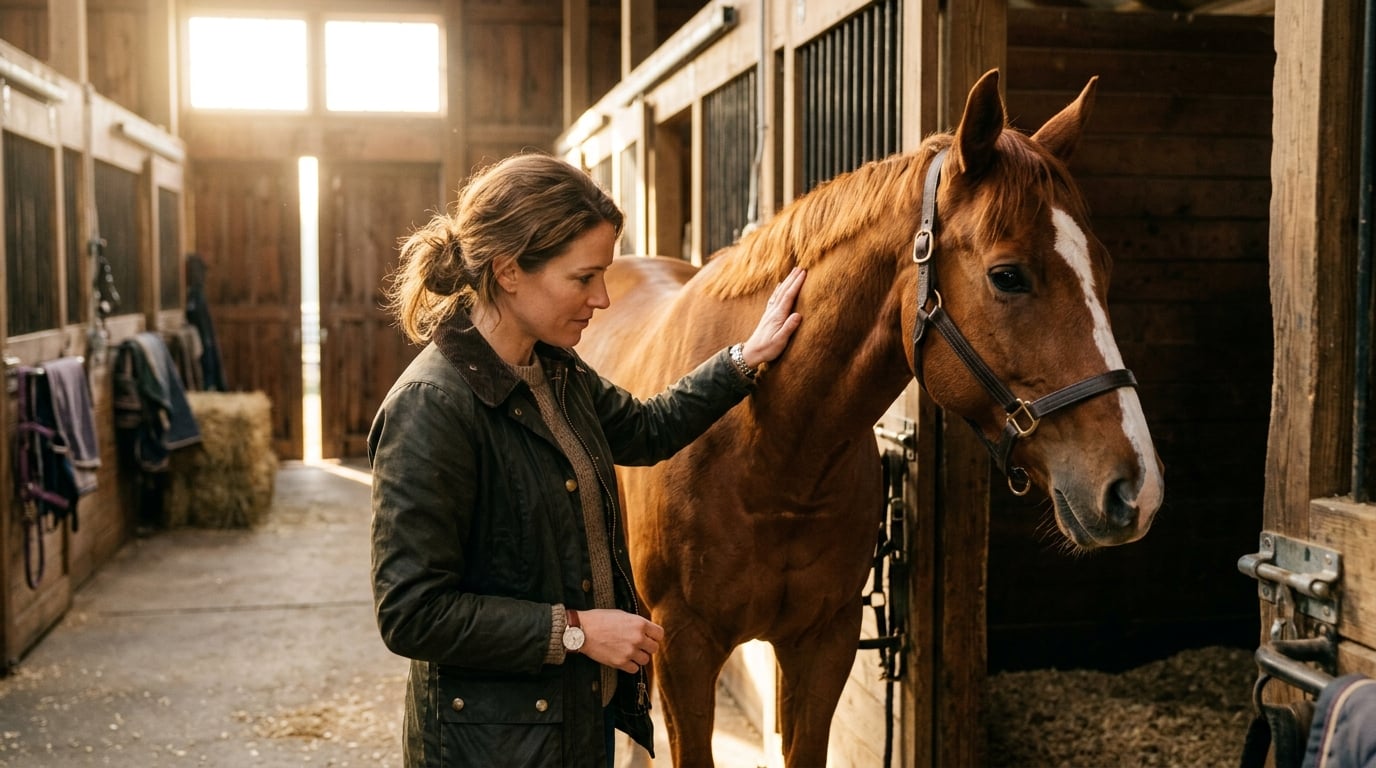
There is a particular kind of fear that only horse people understand. You walk into the barn, or you glance out the kitchen window, and something about the way your horse is standing makes your stomach drop. He is pawing. Or he keeps looking at his side. Or he is down in the shavings at a time of day he is never down.
And immediately, the argument starts in your head. Is this colic? Or am I overreacting again?
I have stood in that exact spot more times than I can count. I have called the vet at 2am over what turned out to be a horse who just wanted to roll. And I have also waved off a "probably nothing" that turned into a long, frightening night. So let me share what I have learned about reading those early signs — not to replace your vet, but to help you trust yourself a little more in that first uncertain moment.
First, why colic scares us so much
"Colic" is not a diagnosis. It is just a word for abdominal pain, and it can come from dozens of causes — a gas bubble that will pass on its own, a mild impaction, a spasming gut, or something serious like a twist that needs surgery. The reason it frightens us is that from the outside, a mild gas colic and the early stage of a life-threatening one can look almost identical.
That is exactly why early observation matters so much. You usually cannot tell the cause by looking. But you can watch how the signs behave over time, and that pattern is what helps you and your vet make good decisions.
The signs, from subtle to serious
Here is roughly how colic signs escalate. Not every horse reads the script, but this is the general progression:
Early and subtle:
- Going off feed, or eating more slowly than usual
- Curling the upper lip, looking at or nipping at the flank
- Restlessness — shifting weight, not settling
- Pawing at the ground
- Fewer or drier manure piles than normal
- Lying down more than usual, but calmly
More concerning:
- Repeated lying down and getting up
- Rolling, especially if it seems urgent or violent
- Sweating without exertion
- Stretching out as if to urinate but not producing
- Elevated heart rate and breathing
- No gut sounds when you press an ear to the flank
Emergency — call now:
- Violent, repeated rolling or throwing themselves down
- Signs of shock: pale or dark gums, rapid heart rate, cold extremities
- Complete absence of manure over many hours combined with distress
- Pain so severe the horse cannot be kept still or safe
The single most useful thing you can do before the vet arrives is take vital signs and write down the time. "Restless since 6, pawing by 6:30, sweating by 7" tells a story that "he's been off for a while" never can.
Know your horse's normal
This is the part I wish someone had drilled into me earlier. You cannot recognize "abnormal" if you do not know what "normal" looks like for your horse. So learn these baselines when your horse is healthy and relaxed:
- Temperature: roughly 99–101°F
- Heart rate: about 28–44 beats per minute at rest
- Respiration: around 8–16 breaths per minute
- Gut sounds: gurgles and rumbles on both sides — silence is a warning sign
- Gums: moist and pink, with capillary refill under two seconds
- Manure: how many piles a day is typical for him, and what they normally look like
A horse with a resting heart rate of 60 is telling you something. But you only know that is high if you know his normal is 36. This is genuinely why I keep daily observations on my own horses — not because I am trying to turn horsekeeping into paperwork, but because when I am scared and second-guessing myself at dawn, a record of "here is what normal looked like last week" is the calmest voice in the room.
While you wait for the vet
If you have called your vet and colic is suspected, a few general principles (always follow your own vet's specific instructions):
- Remove food so you are not adding to a possible blockage.
- Let them rest if they are quiet. You do not have to force a colicking horse to walk endlessly — that old advice is oversold. Hand-walking is useful mainly to discourage violent rolling and to keep a restless horse from hurting himself.
- Keep them safe. If they are rolling hard, a safe, open area with good footing matters more than anything.
- Do not give banamine or any drug without talking to your vet first. Masking pain can hide exactly the information the vet needs to judge severity.
- Note the time of everything. When signs started, when they worsened, last manure, last feed, any medication.
The overreacting question
Here is the truth that took me years to make peace with: it is not overreacting to check. Taking a temperature, listening for gut sounds, watching for ten quiet minutes — none of that is overreacting. That is just good horsemanship.
The thing you are really afraid of is calling the vet unnecessarily, and I understand that — nobody wants the bill or the embarrassment of a false alarm. But I promise you, no good equine vet is annoyed by the owner who caught something early and called. They are far more worried about the ones who waited.
So if your gut says something is wrong, believe it enough to look closely. Take the vitals. Write down the time. Watch how it behaves over the next half hour. And if the picture is worsening — or if it is severe from the start — make the call and let the professional decide. That is not panic. That is the job.
Our horses cannot dial the phone. That part is always going to be up to us.
EquiNexus was built by a barn owner to take the mental load off days like these — keeping every horse’s meds, vet dates, and feeding notes in one calm place, so nothing important slips through.
Try it free for one horseNo credit card required.