
Core, Risk-Based, and the Paper You Always Lose: A Calmer Way to Think About Vaccines
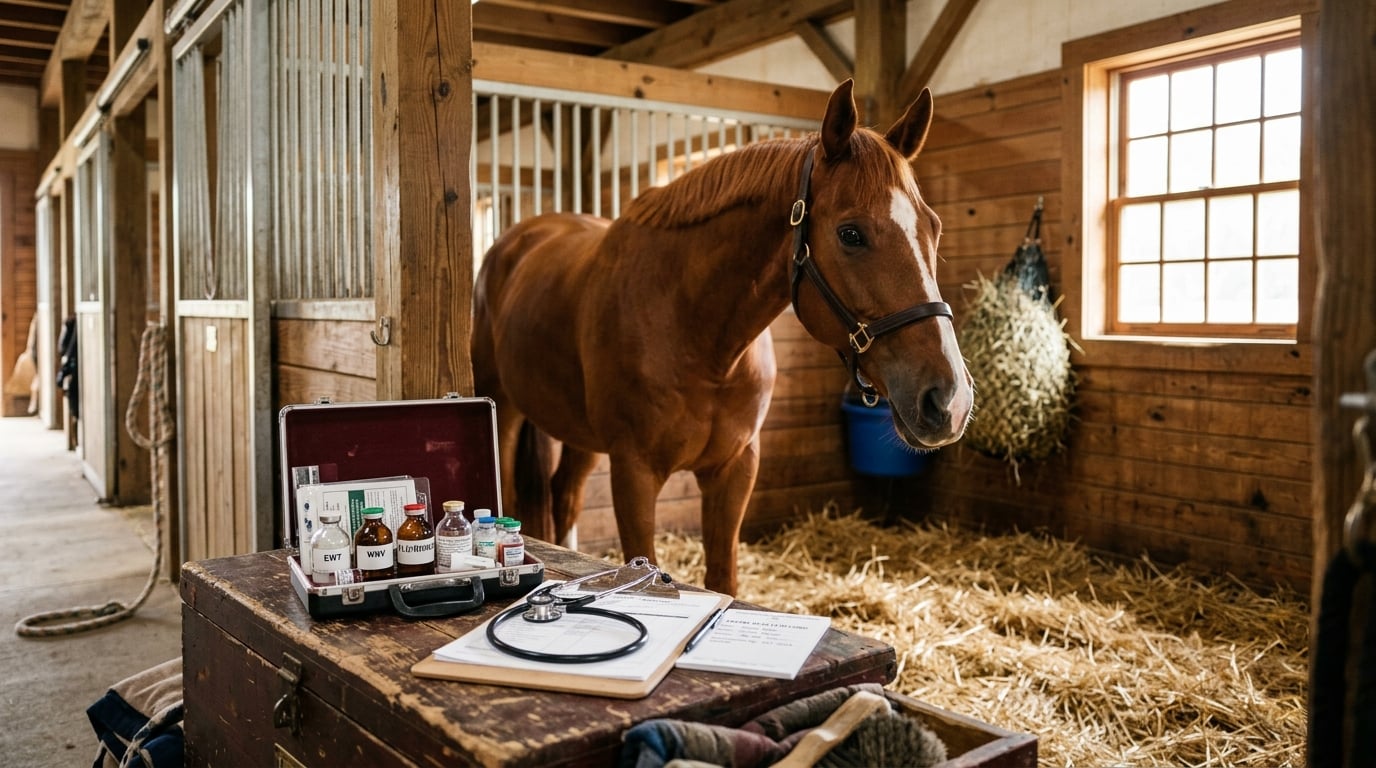
Every year around shot season I watch the same quiet panic ripple through barns and forums. Does he need the flu one this year? Wait, is that the same as rhino? Did we do West Nile in the spring or am I thinking of last year? And where on earth did I put the sheet the vet gave me?
Vaccines are one of those topics that feel like they should be simple and somehow never are. So let me try to lay it out the way I wish someone had laid it out for me — calmly, without the pop-quiz energy.
Core versus risk-based, in plain language
The veterinary world sorts equine vaccines into two buckets, and just knowing the buckets makes the whole thing less overwhelming.
Core vaccines are the ones recommended for essentially every horse, everywhere, because the diseases are severe, widespread, or a danger to people too. These generally include:
- Rabies — nearly always fatal, and a human health issue
- Tetanus — horses are extremely susceptible
- Eastern and Western Equine Encephalomyelitis (EEE/WEE) — mosquito-borne, often fatal
- West Nile Virus — also mosquito-borne
Risk-based vaccines are the ones you and your vet decide on depending on your horse's actual life — where you live, whether you travel to shows, whether new horses come and go, your climate. These often include:
- Influenza (flu)
- Equine Herpesvirus (EHV / rhino)
- Strangles
- Potomac Horse Fever, botulism, and others depending on region
The stay-at-home retiree and the horse hauling to a show every other weekend genuinely have different risk profiles. That is the whole point of the risk-based bucket — it is meant to be a conversation, not a checklist everyone must complete.
The timing part that trips everyone up
Here is where the confusion usually creeps in: not everything is annual, and not everything lines up neatly.
- The mosquito-borne core vaccines (EEE/WEE, West Nile) are often given in spring, ahead of mosquito season.
- Some risk-based vaccines like flu and EHV may be recommended twice a year for higher-risk horses.
- Boosters for a brand-new vaccine often need a follow-up dose a few weeks later the first time around — easy to forget.
- Timing shifts with your climate and your horse's travel schedule.
None of this is hard once it is written down. It only feels hard when you are reconstructing it from memory every single spring.
You do not need to memorize the vaccine schedule. You need a reliable place to look it up — and a record of what actually happened last time.
And then there is the paper
Can we talk about the record itself for a second? Your vet does a thorough visit, hands you a sheet or a little card listing exactly what was given and when — and then that paper enters the Bermuda Triangle of the tack room. The truck door pocket. A kitchen drawer. Gone precisely when you need it: at the next visit, or when a show or boarding barn asks for proof, or when a new vet asks what he has already had.
This is the part that turns a solved problem back into a stressful one. The care happened. The record of the care wandered off.
A calmer approach
What has worked for me is treating the record as being just as important as the shot:
- Log it the day it happens — what was given, the date, and when the next one is due — instead of trusting the paper to survive.
- Keep the history, not just the next date. Seeing the last two years of what he actually received answers most of the spring-panic questions instantly.
- Note the risk-based decisions and why. "Skipping strangles this year, no new horses coming in" is worth remembering when you second-guess yourself in twelve months.
- Have it retrievable anywhere — because the moment someone asks for proof of a current Coggins or vaccine is never when you are standing next to your filing cabinet.
I built EquiNexus partly out of sheer frustration with losing those vet sheets — so each horse has a health record that holds what was given, when, and what is coming up, and I can pull it up standing in the aisle or at a show without digging. That is not the only way to solve it; a dedicated binder that never leaves a specific shelf works too, if everyone respects the shelf. The goal is just that the record outlives the piece of paper.
Vaccines protect our horses. A record you can actually find protects your peace of mind. You deserve both.
EquiNexus was built by a barn owner to take the mental load off days like these — keeping every horse’s meds, vet dates, and feeding notes in one calm place, so nothing important slips through.
Try it free for one horseNo credit card required.